.png)


Terms and Conditions of Service
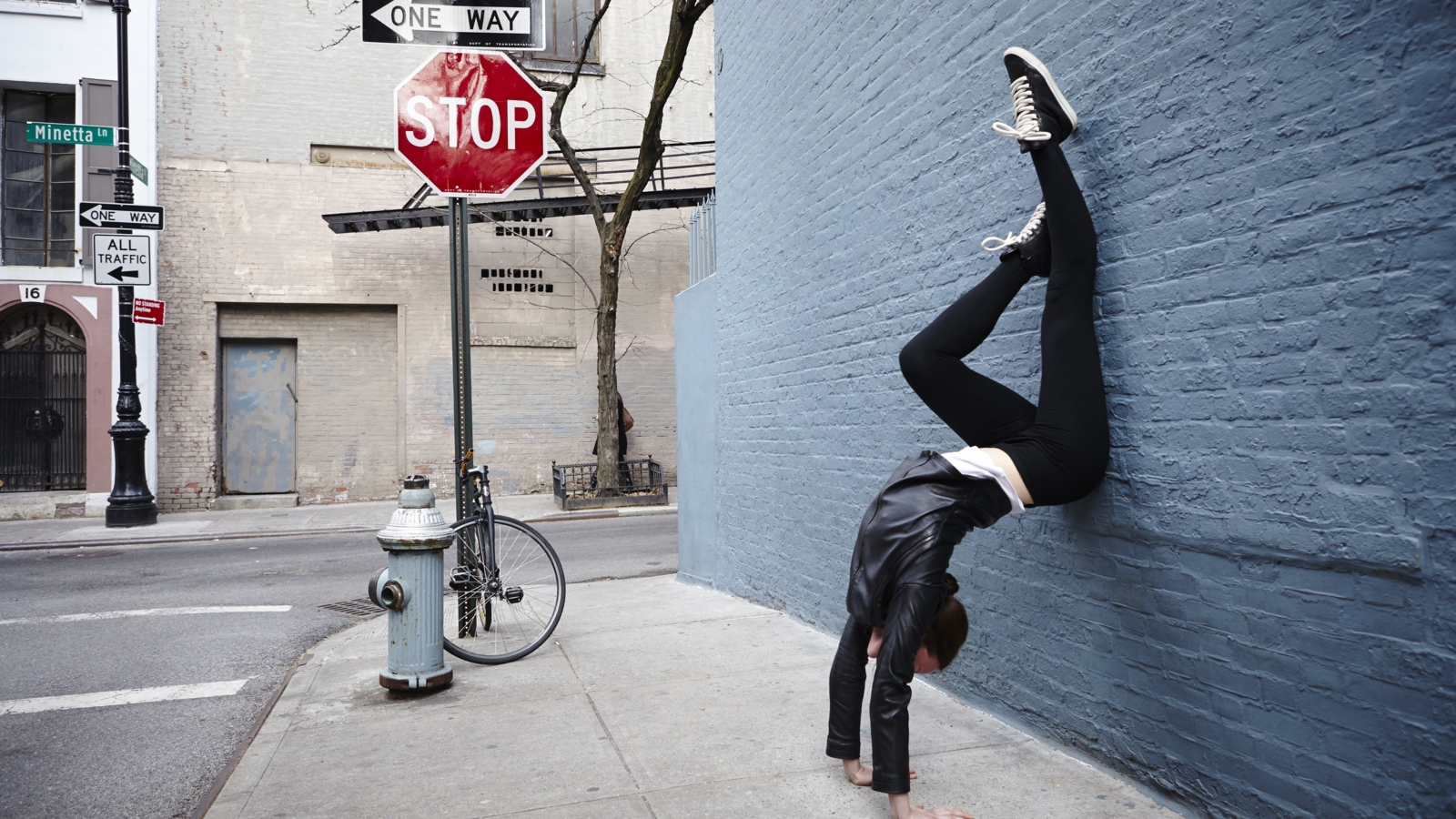
From flawless pirouettes to deep pliés, dance challenges your body to perform with precision and fluidity.
But achieving this level of control takes more than just natural talent - it requires a strategic approach to stretching that targets your key muscle groups, like the hips, hamstrings, and back.
In this guide, we’ll take you through some of the best stretches for dancers, and moves that not only improve performance but keep your body strong and ready for the next rehearsal or performance.
Frog Stretch
How to do it
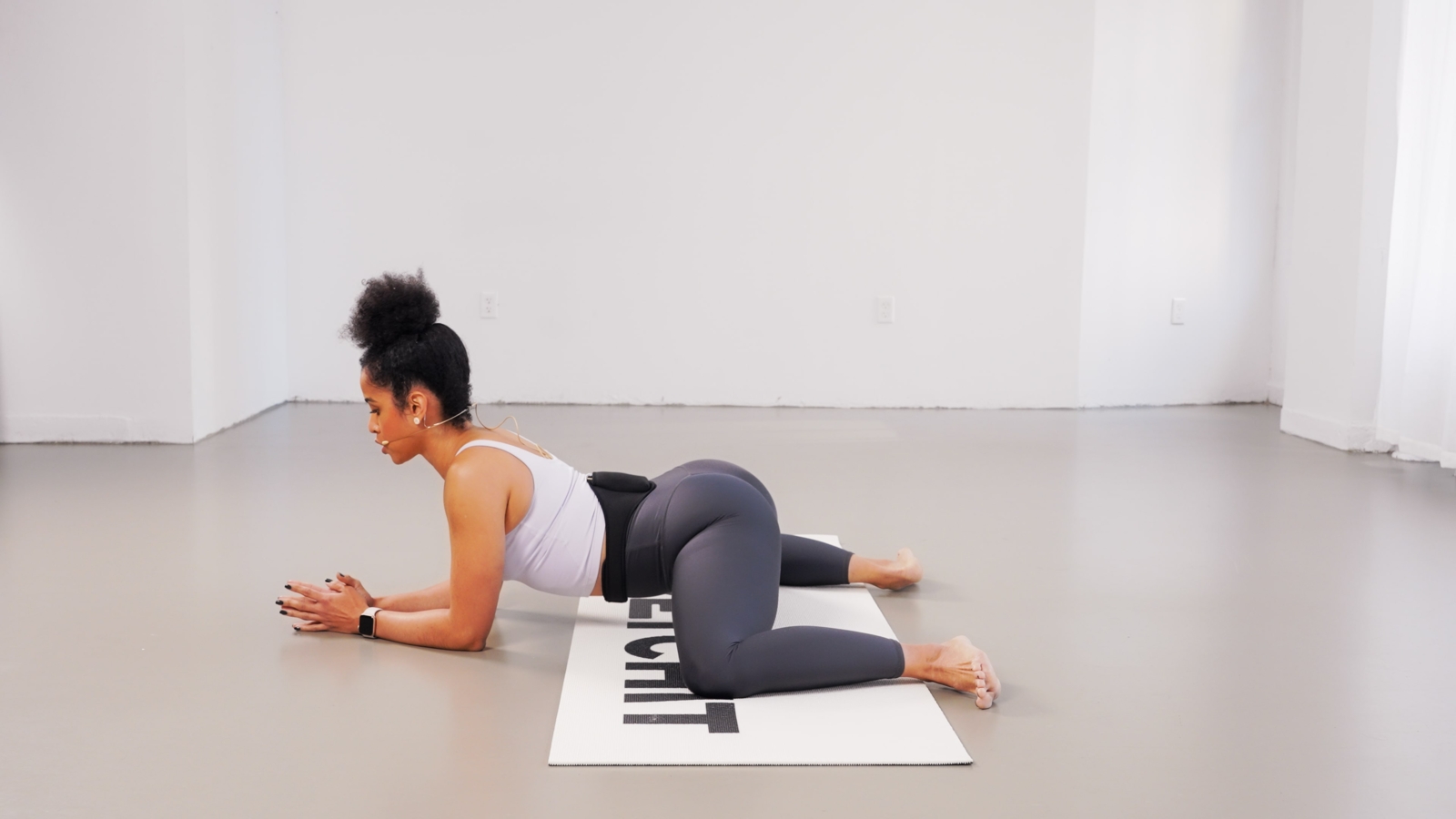
- Start on all fours, with your knees as wide as possible and feet pointing out.
- Slowly lower your glutes towards your ankles.
- Rest on your forearms or palms for support, and hold the stretch.
Why it helps dancers
The frog stretch primarily targets the adductors and hip flexors, which are really important for maintaining turnout in ballet, deep pliés, and achieving full splits in contemporary dance.
By deeply opening the hips, the frog stretch not only increases your range of motion but also enhances your ability to control and stabilize your legs during intricate footwork or wide stances.
Improved hip mobility translates to smoother transitions between movements, greater extension in leaps, and the ability to hit those technically demanding positions with ease and precision.
Middle Splits
How to do it
- Slowly lower yourself to the ground, with your legs spread outwards.
- Engage your core and maintain an upright posture as you slide your legs wider.
- Don’t push beyond what feels comfortable.
Why it helps dancers
Middle splits are an iconic stretch, synonymous with flexibility and control in the dance world.
This move not only showcases lateral flexibility but also serves as the foundation for a wide range of dance poses, including standing splits and other extended leg movements.
The stretch targets key muscles like the hip abductors, inner thighs, and hamstrings, which are essential for mastering powerful jumps like grand jetés and achieving deep pliés.
The increased range of motion from practicing middle splits allows dancers to perform with cleaner lines and greater extension, making it easier to hit and hold those stunning, high-leg poses both on the ground and in the air.

Seated Hamstring Stretch
How to do it
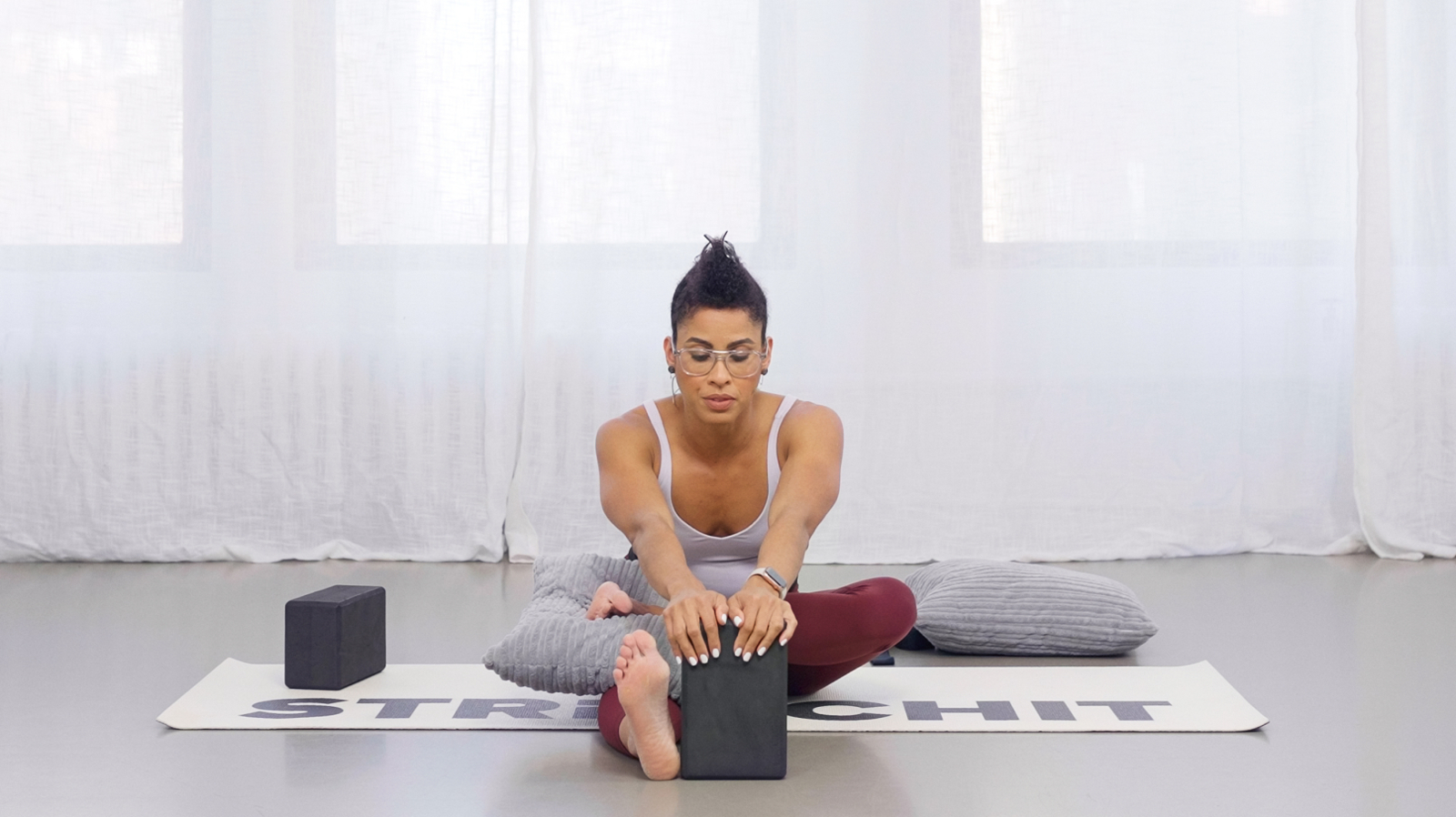
- Sit on the floor with one leg extended straight in front of you.
- Bend your other leg, placing the sole of your foot against your inner thigh.
- Reach forward towards your toes and hold.
Why it helps dancers
Tight hamstrings are a dancer’s worst enemy, especially when performing high kicks or quick footwork. The seated hamstring stretch lengthens the hamstrings, enhancing your ability to execute powerful leaps and extensions.
Incorporating this stretch regularly will help you move more fluidly and protect against strain, especially during fast, dynamic choreography that demands both flexibility and power.
Cat-Cow
How to do it
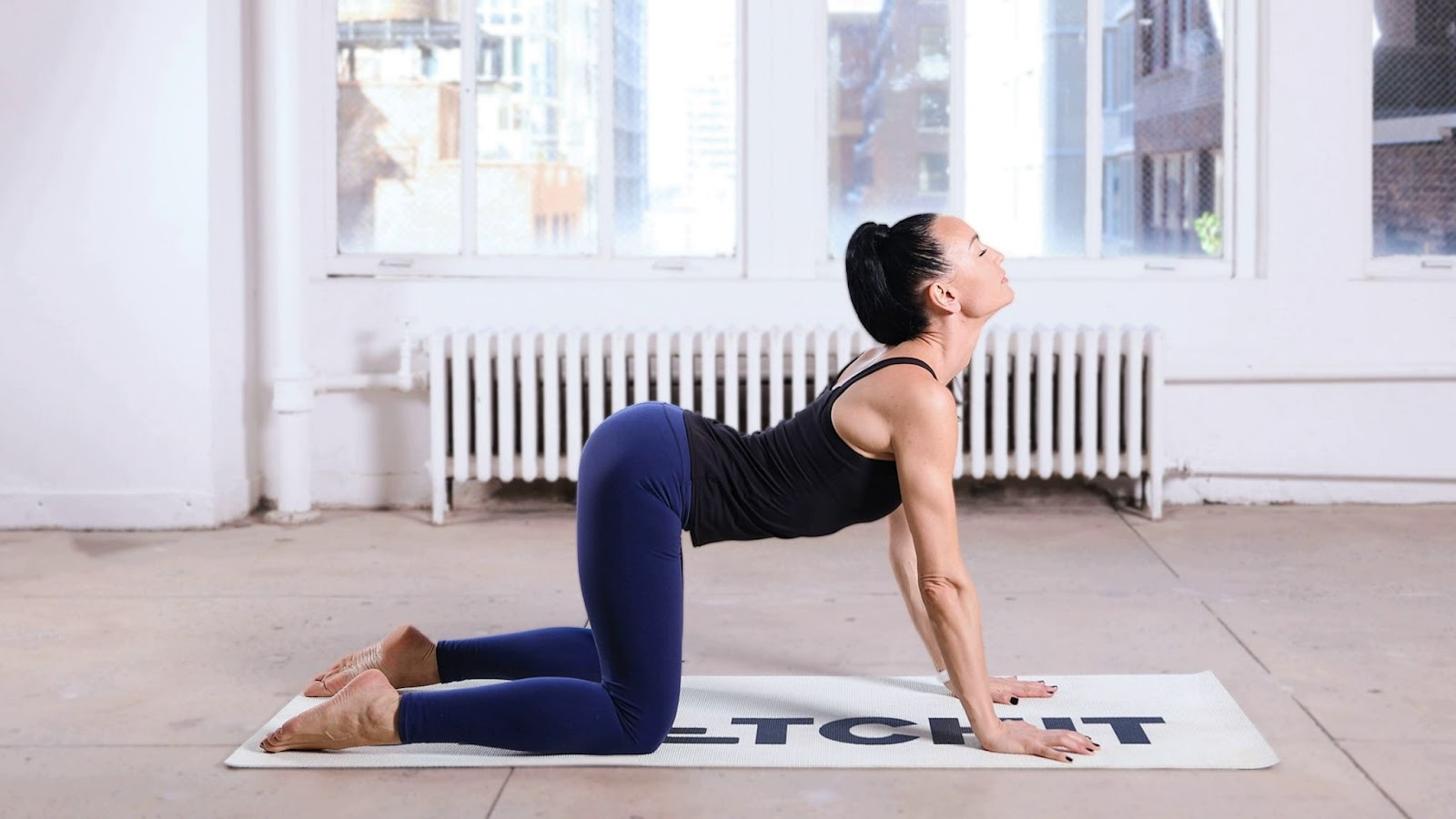
- Begin on all fours, with your wrists aligned under your shoulders and knees under your hips.
- Inhale as you arch your back (Cow Pose), lifting your head and tailbone upwards.
- Exhale as you round your back (Cat Pose), drawing your chin towards your chest.
- Continue alternating between Cat and Cow movements.
Why it helps dancers
The Cat-Cow stretch is an essential movement for dancers, offering a powerful way to warm up and mobilize the spine.
By flowing between spinal flexion and extension, the Cat-Cow stretch not only increases spinal mobility but also helps release tension and stiffness accumulated from intense rehearsals or long hours of training.
This helps improve posture and balance - key components in maintaining graceful lines and powerful movements. The stretch also promotes better alignment, which is useful for executing turns, back arches, and even jumps with fluidity and precision.
Pigeon Pose
How to do it
- Start in a plank position.
- Bring your right knee forward and place it near your right wrist, with your shin at a diagonal under your body.
- Extend your left leg straight behind you, lowering your hips towards the floor.
- Hold the stretch, then switch sides.
Why it helps dancers
Pigeon pose targets the hips and glutes - two major muscle groups essential for both stability and power.
These muscles are heavily engaged in nearly every movement and maintaining their flexibility is key to executing bigger, more graceful extensions and fluid transitions.
This deep stretch opens up the hip flexors and external rotators, helping to increase mobility and prevent tightness.
By regularly incorporating pigeon pose, dancers can alleviate hip tension, which often results from repetitive movements or holding challenging positions for extended periods.

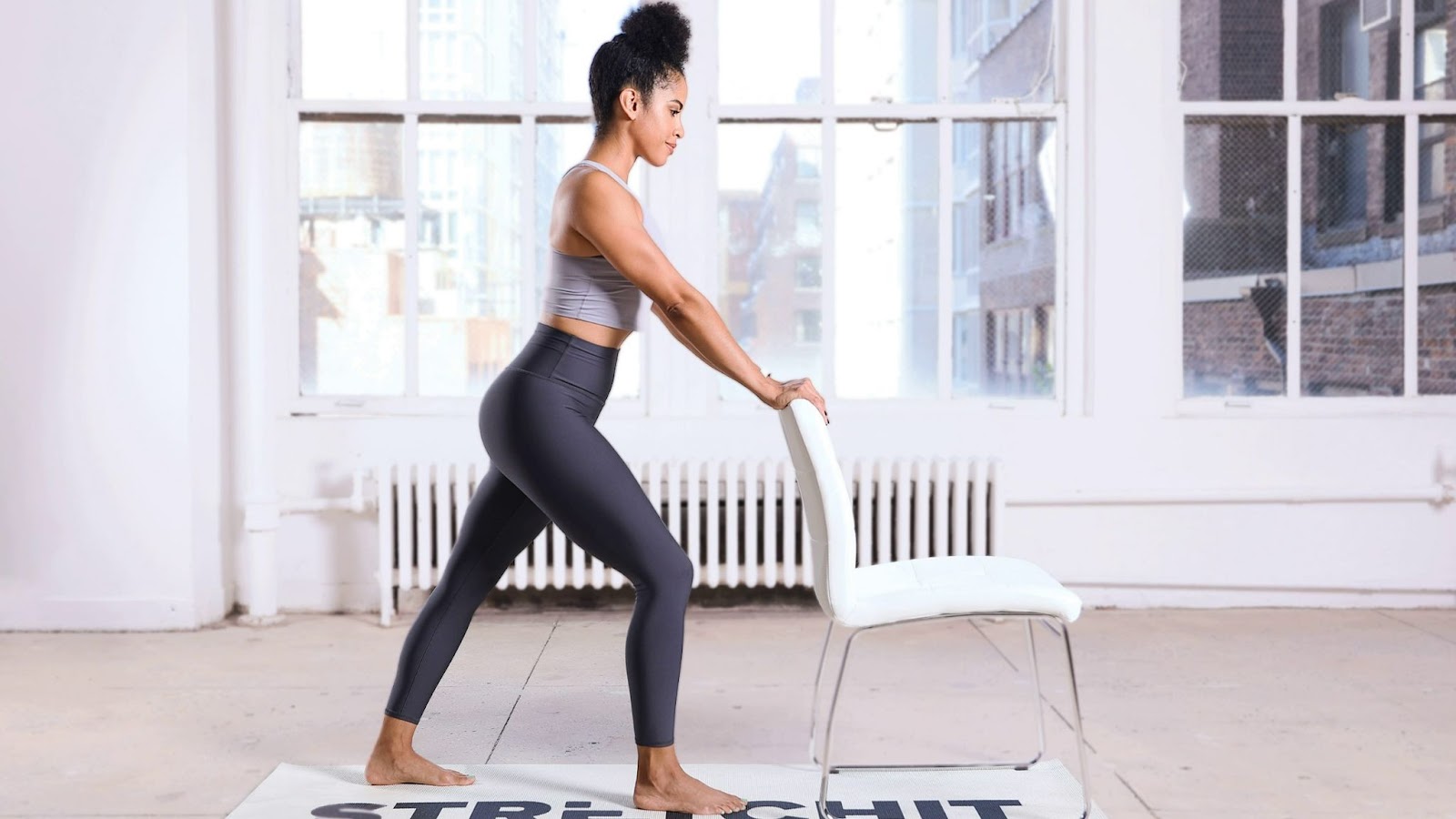
Standing Calf Stretch
How to do it
- Stand facing a wall or a stable surface for balance.
- Step one leg back, keeping the heel on the ground and the leg straight.
- Lean forward into the wall to stretch the calf.
- Switch legs and repeat.
Why it helps dancers
Calf muscles are constantly engaged in dance, so stretching them helps prevent cramping and stiffness, especially after long sessions on your toes.
A good calf stretch also improves ankle mobility, giving you more control over pointed and flexed feet during jumps and turns.
Cobra Stretch
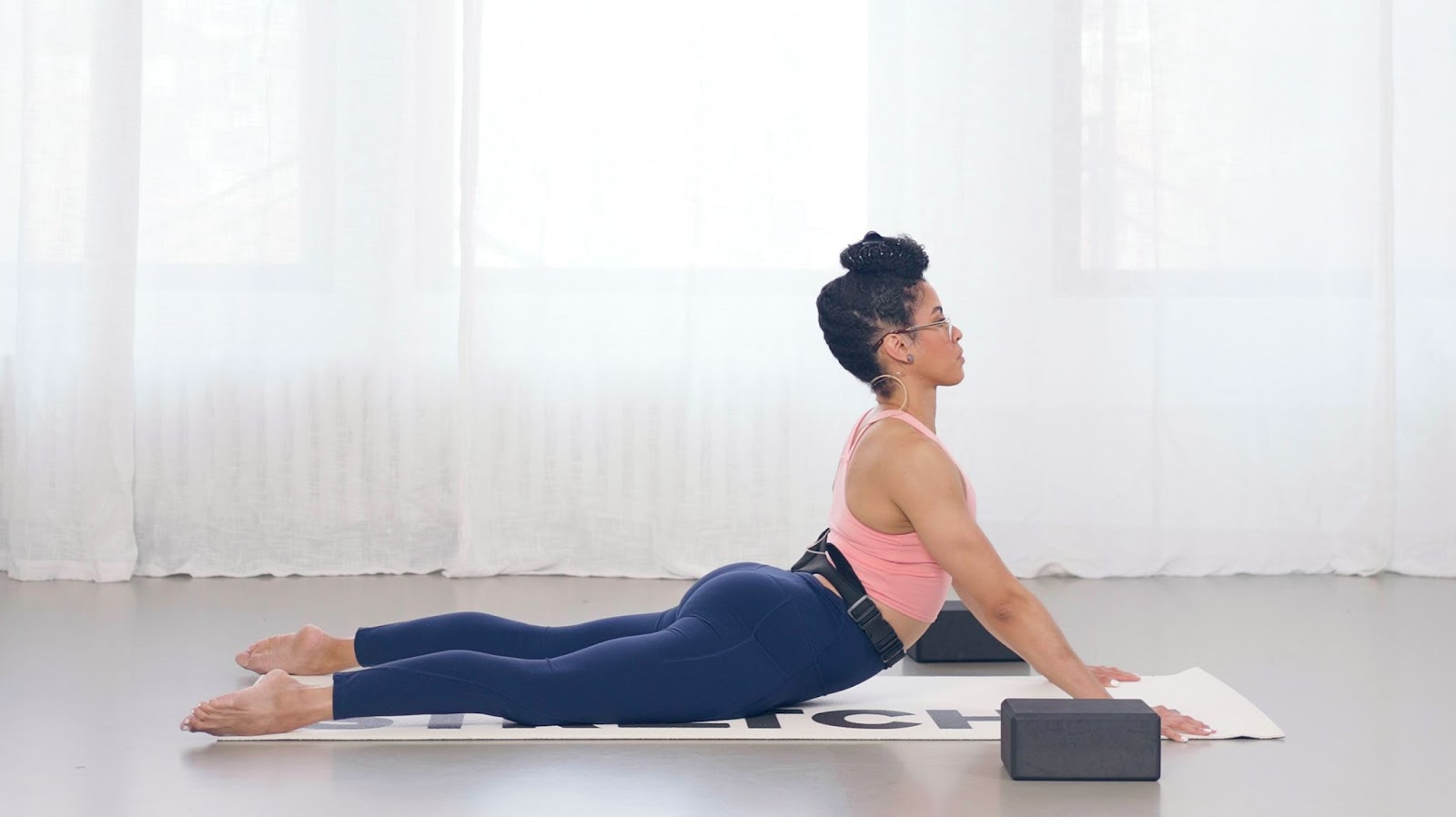
How to do it
- Lie face down on the floor with your palms flat next to your shoulders.
- Press through your hands, lifting your chest upwards while keeping your pelvis on the ground.
- Hold the stretch as you lengthen through your spine.
Why it helps dancers
The Cobra stretch is a fantastic exercise for dancers, effectively opening up the chest while simultaneously strengthening the lower back.
This stretch not only enhances spinal flexibility but also engages and elongates the core muscles, creating a strong foundation for many dance movements.
Incorporating the Cobra stretch into your routine can help prevent injuries related to tight back muscles, providing a greater sense of mobility and comfort when transitioning through various positions, especially back arches.
Things to Consider
Breathing Techniques
- Focus on slow, deep inhales and exhales to relax muscles and stretch deeper.
- Proper breathing aids muscle recovery and oxygen flow, improving performance.
- Exhale while deepening a stretch to release tightness.
Stretching Frequency
- Aim to stretch 3–5 times a week, targeting different muscle groups.
- Stretch after rehearsals or performances when muscles are warm.
- Avoid overstretching to prevent injury and muscle fatigue.
Warm-Up First
- Warm up with light cardio (jogging, jumping jacks) for 5–10 minutes before stretching.
- Warming up increases blood flow and reduces the risk of strains.
Stretch Progressions
- Start with gentler versions of stretches if you're a beginner.
- Use props (like a yoga strap) or modify positions (e.g., bend knees) to reduce strain.
- Progress to advanced variations as your flexibility improves.
Injury Prevention
- Stretching should not be painful; mild discomfort is normal, but sharp pain indicates a need to stop.
- Listen to your body and respect its limits to avoid injury.
Get Started with STRETCHIT
Dancers rely on flexibility, strength, and mobility to perform at their best, and stretching is the key to unlocking all three. Incorporating these stretches into your daily routine will help you move more fluidly, reduce the risk of injury, and recover faster.
And if you're looking for more ways to enhance your flexibility, the STRETCHIT app has got you covered with guided routines tailored to all sorts of goals and objectives.
Whether you're aiming for perfect splits or just want to improve your hip range of motion, STRETCHIT offers programs that meet your needs, helping you perform at your peak on and off the stage.