.png)


Terms and Conditions of Service

Training for Splits: What Actually Matters
Splits are often seen as a final shape - something you either can or cannot do. In a recent live session, our trainer Alicia Archer challenged this idea and reframed splits as a long-term training process rather than a single flexibility goal.
According to Alicia, progress in splits does not come from forcing depth or stretching harder. It comes from understanding how your body adapts over time, how strength and flexibility work together, and why patience is a key part of the process.
Below, we break down Alicia’s main insights to clarify what training for splits actually involves and what truly supports sustainable progress.
What training for splits really means
Alicia explains that training for splits is not about reaching the floor as quickly as possible. It is about gradually teaching your body to tolerate and control longer ranges of motion.
This means that training happens well before you are close to a full split. Even higher, supported positions are part of the process. The goal is not the depth itself, but how well your body can stay relaxed, stable, and engaged in the position you are currently working with.
Alicia emphasizes that consistency matters far more than intensity. Small, repeated exposures to the range build far more resilience than occasional aggressive stretching.
Why strength and flexibility are not opposites
One of the key points Alicia highlights is that flexibility does not exist without strength. When muscles lengthen, they still need to produce force to support the joints.
Without strength, deeper ranges can feel unstable or unsafe. This is often why progress stalls or why people feel stuck despite stretching regularly.
Training for splits therefore includes:
- Actively engaging muscles in long ranges
- Building control rather than collapsing into stretches
- Teaching the nervous system that the position is safe
This approach helps flexibility gains last, rather than disappear after a session.
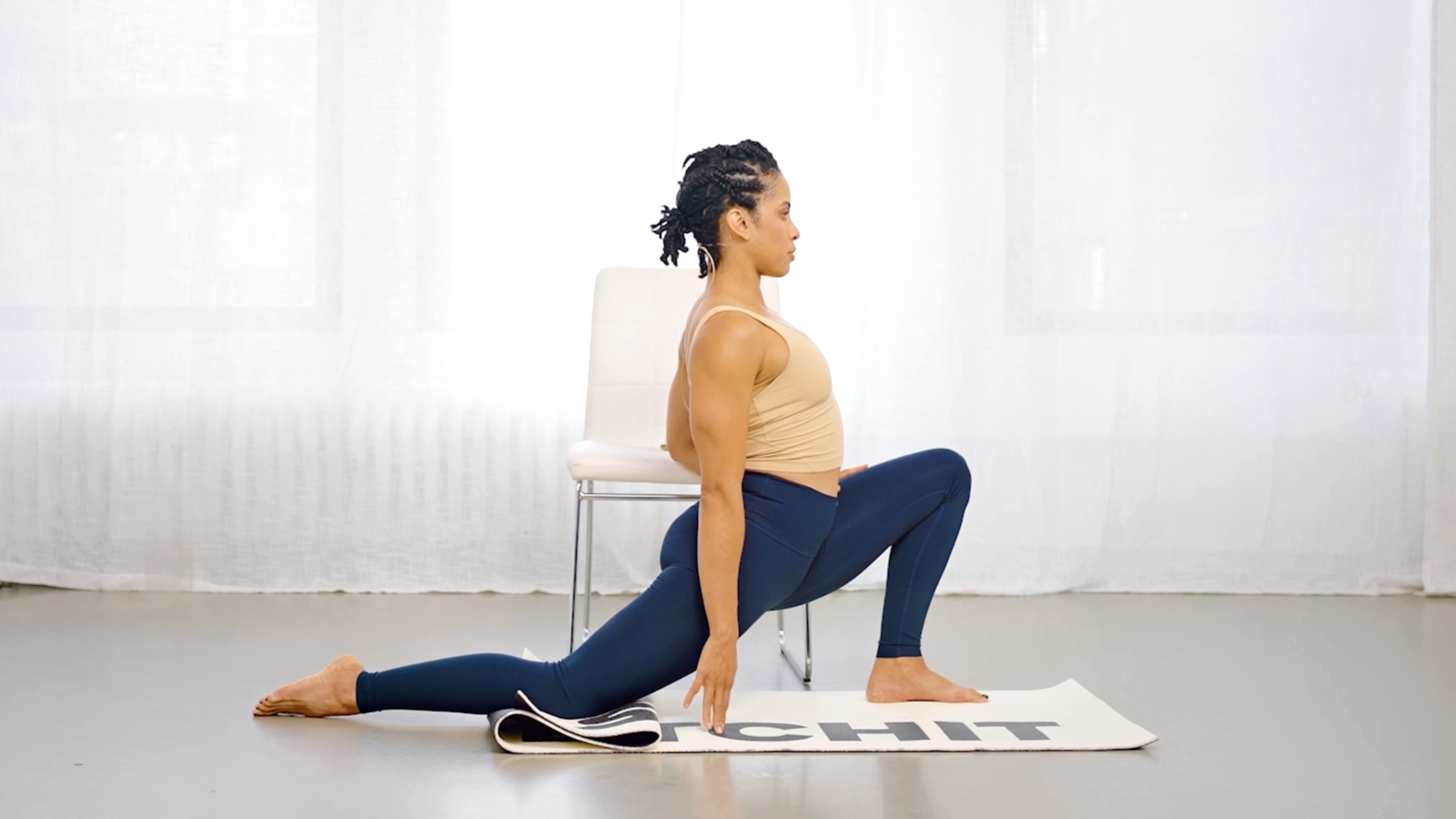
Progress in splits is rarely linear
Alicia also addresses a common frustration: feeling like progress goes up and down.
Some days you may feel closer to the floor, while on others the same position feels tighter or more resistant. According to Alicia, this variability is normal and does not mean that training is failing.
Factors like fatigue, stress, recovery, and overall load all influence how your body responds on a given day. Training for splits means working with these fluctuations rather than fighting them.
Common mistakes Alicia often sees
During the live session, Alicia pointed out a few patterns that tend to slow progress:
- Chasing depth instead of quality
- Ignoring strength work in favor of passive stretching
- Comparing progress to others
- Expecting fast or linear results
She explains that flexibility adapts at its own pace, and trying to rush the process often leads to frustration or setbacks.
Splits training looks different for everyone
Another important takeaway from Alicia is that bodies differ. Bone structure, previous training history, and daily movement habits all influence how splits develop.
This means that training should be individualized. A position that feels appropriate for one person may not be right for another, even if they look similar on the surface.
Alicia encourages focusing on how the position feels rather than how it looks. Control, ease of breathing, and absence of sharp discomfort are more useful indicators than visual depth.
Key takeaways from Alicia Archer
- Training for splits is a process, not a single goal
- Strength and flexibility develop together
- Consistency matters more than intensity
- Progress is rarely linear and that is normal
- Quality and control are more important than depth
If you’d like to explore these principles in practice, STRETCHIT offers a free splits-focused class led by our trainers. It’s designed as an introduction to structured splits training, with an emphasis on control, gradual progress, and listening to your body.
Get started with STRETCHIT
Training for splits is most effective when it is structured, progressive, and guided by experienced trainers. On STRETCHIT, our programs integrate flexibility, strength, and control to support long-term mobility rather than short-term results.
With expert-led sessions from trainers like Alicia Archer, you can train consistently, adapt the work to your current level, and build confidence in deeper ranges over time.
This article is for educational purposes only and does not constitute medical advice. Hips, knees, and other joints involved in splits are complex structures. If you experience pain or discomfort, please consult your healthcare provider before continuing.